The legend of Vác
Memento Mori és Ars Memorandi
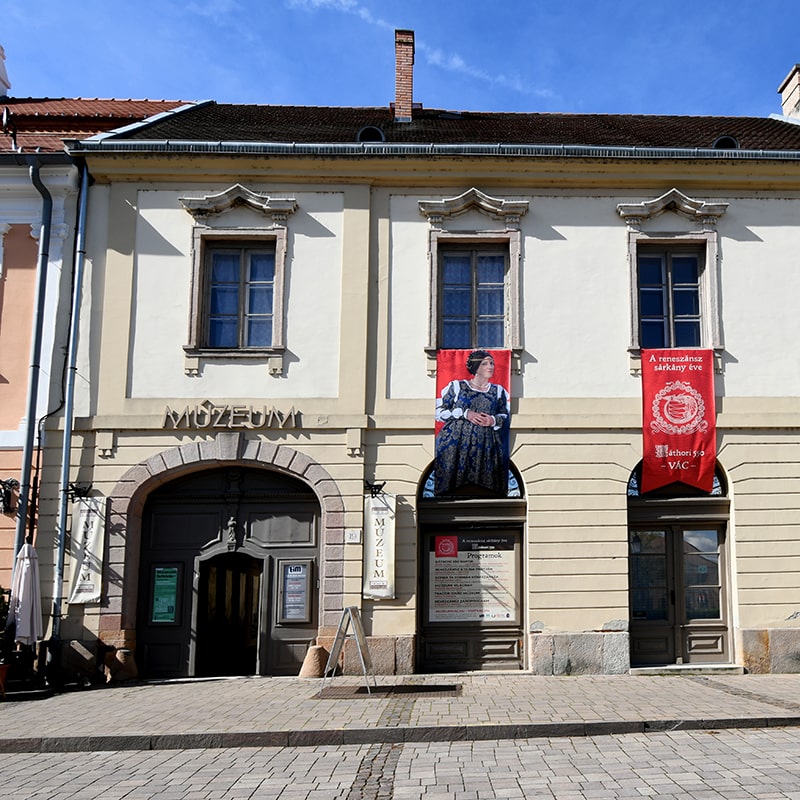
Vác, Március 15. tér 19.
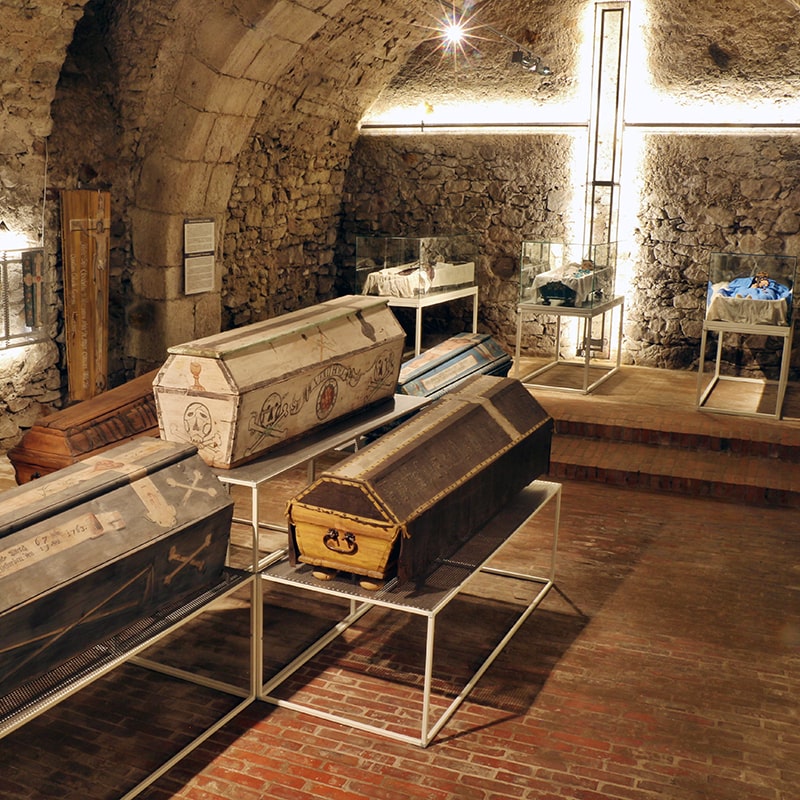
In the crypt found, 262 colorful, decorated coffins, mostly in good condition, contain the spontaneously mummified bodies of citizens of Vác who died and were buried from the middle third of the 18th century to the beginning of the 19th century, and who, thanks to the special climate, remained in good condition; men, women, children, craftsmen, monks, priests, military officers, officials...
The permanent exhibition, renovated in June 2016, is located in the medieval cellar of one of the residential buildings on the main square. Descending the steep stairs into the cool and deep cellar, visitors are greeted by a picture of the crypt from the time and a list of the citizens of Vác who were identified based on their coffin inscriptions.
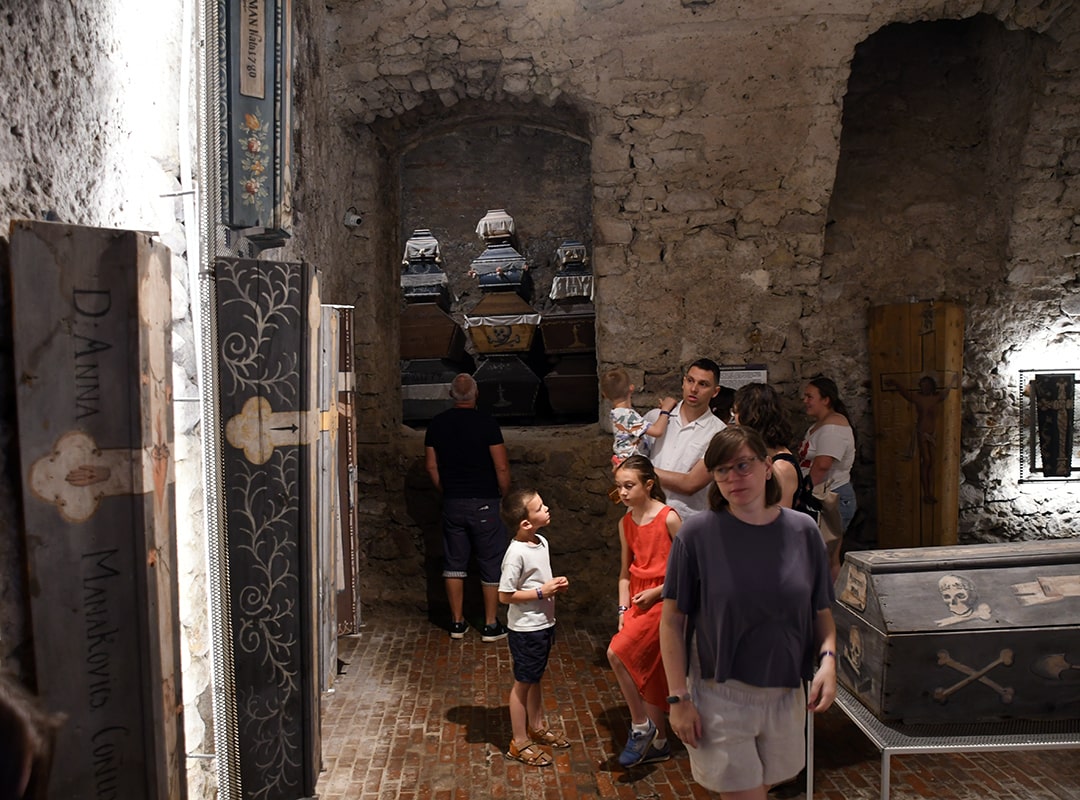
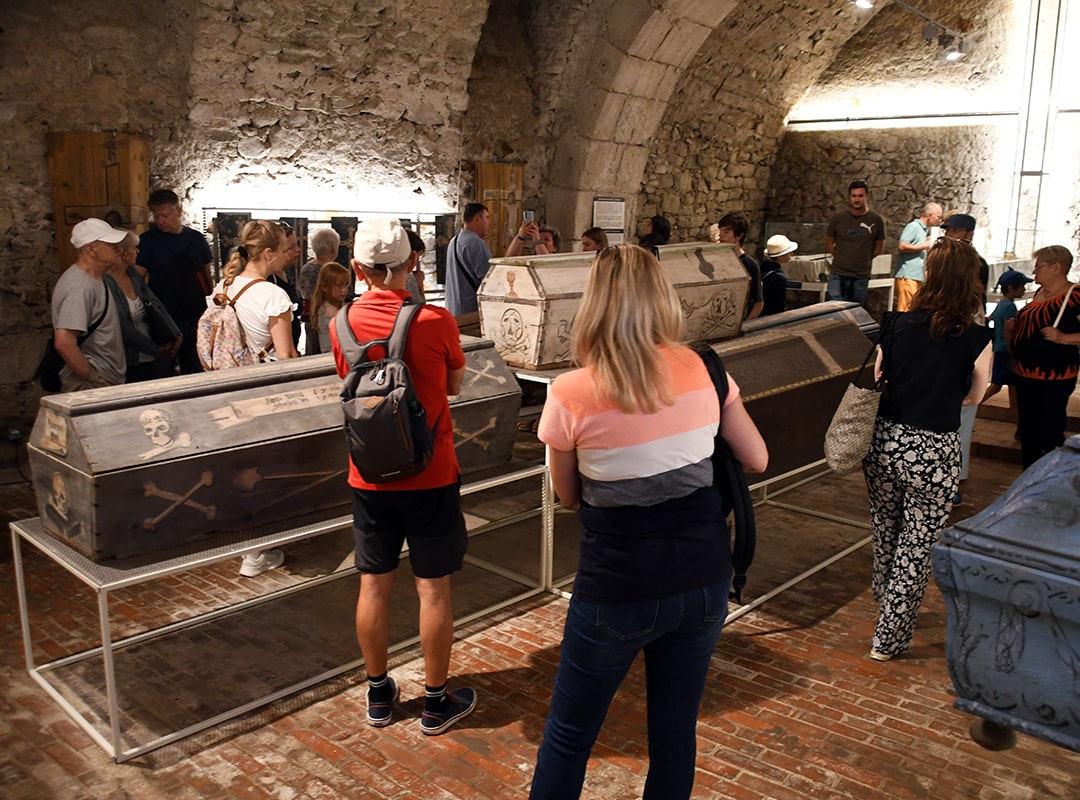
In the small room to the left of the passage, the sacral accessories (crucifixes, rosaries, grace medals) found in the coffins were presented. In the impressive large room of the cellar, painted, colorful coffins of adults and children were placed. The depictions of Christ, religious and death symbols visible on the coffins also refer to the religious worldview of the people of the time and their relationship to death.
In the back of the room, the master tailor György Stefanovics, an unknown middle-aged bourgeois woman, and a 9-year-old girl, Magdolna Salamon, lie in a glass coffin, in reconstructed clothing based on the original. This allows visitors to gain insight into the burial and funeral customs of the late 18th and early 19th centuries. The mummified or partially mummified remains of the citizens of Vác buried in the Dominican crypt of Vác have been placed in the Anthropological Collection of the Hungarian Museum of Natural History.