Kiállítóhely
Vác, Március 15. tér 23.
Tuesday-Sunday
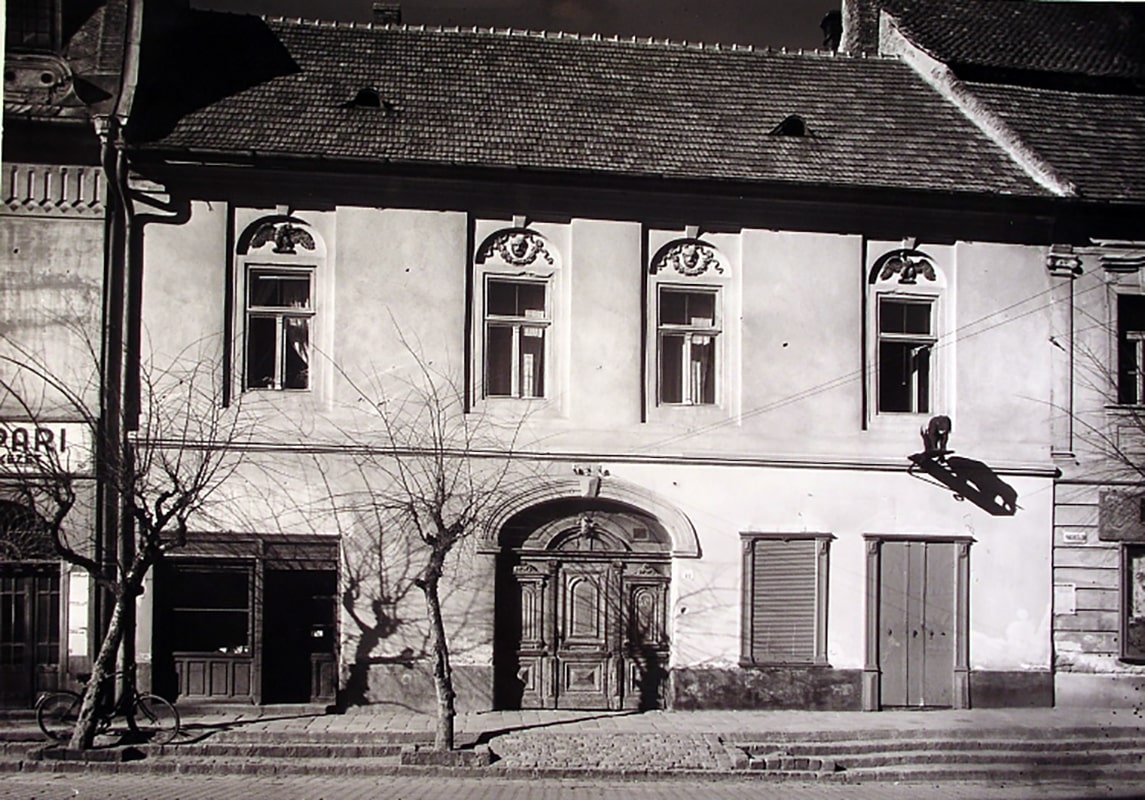
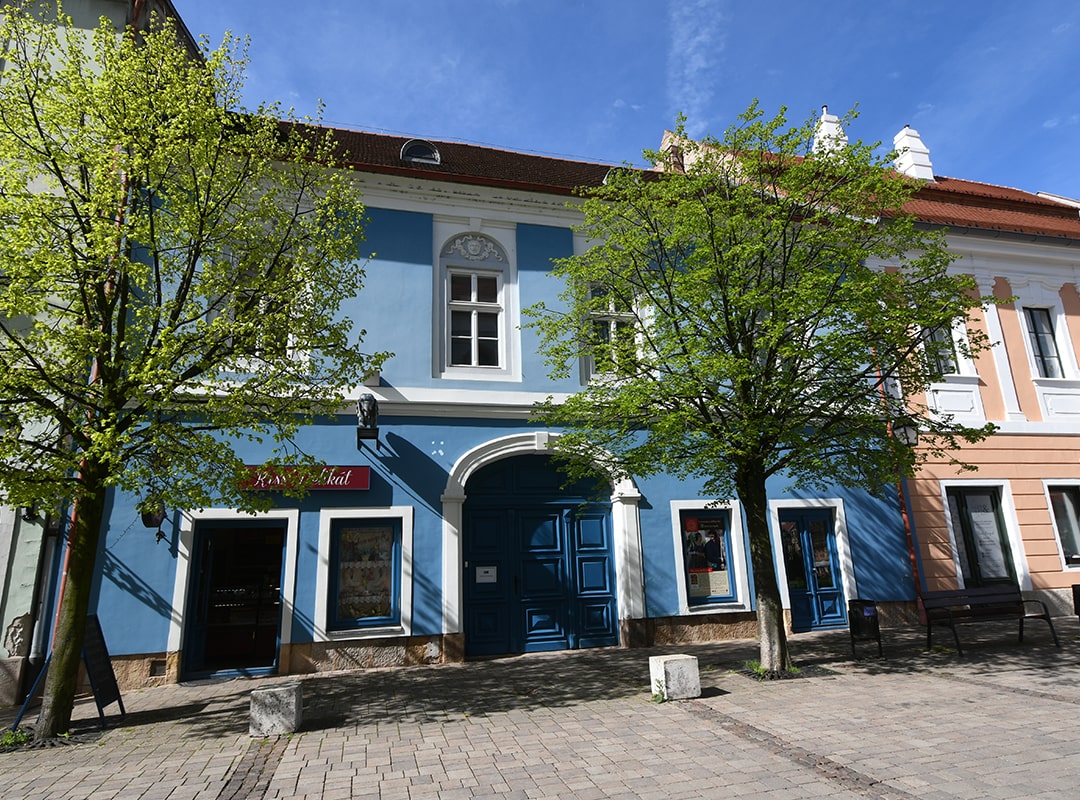
In Vác, at 23 Március 15. tér, in an 18th-century building painted blue, there is a special business company.
According to the map and land register commissioned by Frigyes Mihály Althann in 1718, this building was the residence of Gergely Sőcz (Szűcs). In 1780, as indicated by the garland-decorated masks above the windows, it was rebuilt in the Cof style, and then in 1830 it was supplemented with classicizing elements.
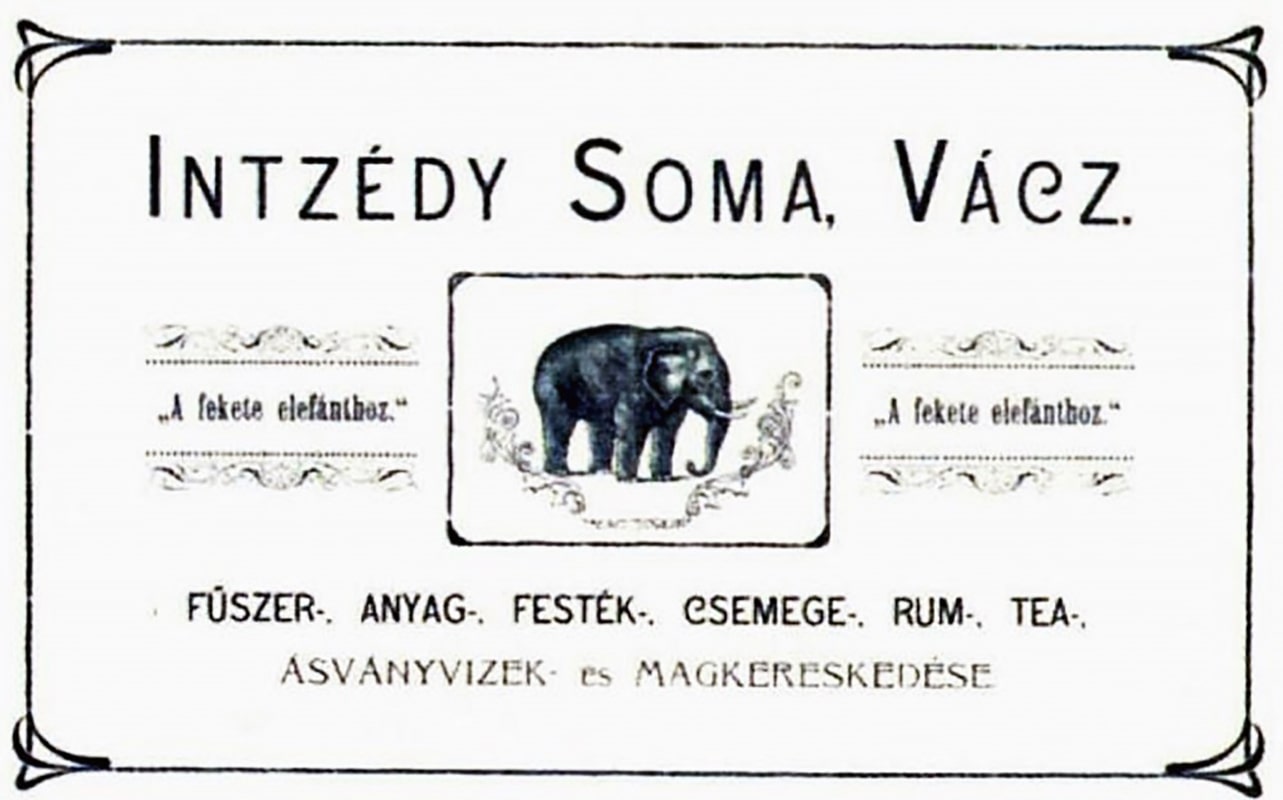
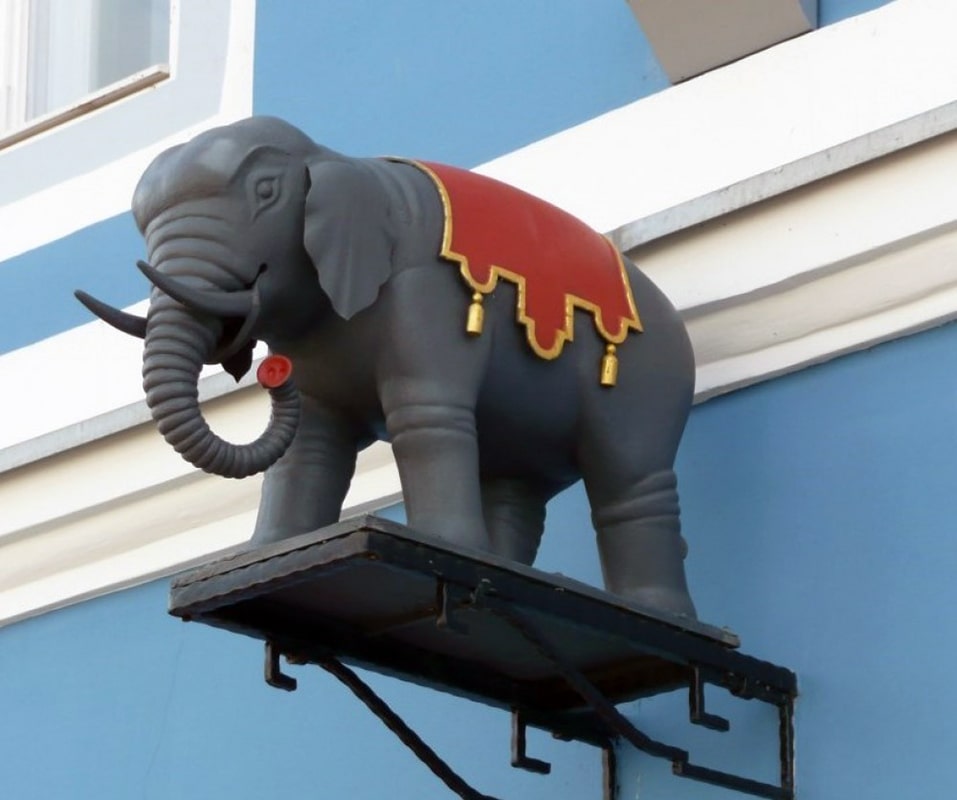
The building's special feature is the sign depicting an elephant. The grocers preferred to choose an exotic animal, a lion or an elephant, as their sign.

The elephant, as a sign, usually referred to the sale of colonial goods – coffee, tea, cocoa, spices. We can find similar signs in the city centers of Pécs and Kaposvár, but this does not mean that these shops were connected to each other.
Locals and market vendors in the area did not encounter elephants often, so it is not surprising that the vernacular simply called the shop on the Main Square of Vác "Bihalyos" (buffalo).
In the 1870s – according to Ignác Tragor, whose family included several merchants – “window displays were unknown. The grocer would put a few sugar bowls in the window, but sometimes he would also put empty crates and barrels in front of the store entrance so that people could see: fresh goods had arrived! Depending on the season, during Lent, barrels of herring, and in spring, sacks full of seeds, obstructed the path of pedestrians.”
The owner of the Elefántos, or “Bihalyos” shop, was Soma Intzédy. He arrived in Vác from the Upper Hungary in 1855, at the age of 15, and started working in his uncle’s grocery store. In 1864, he became independent and opened a grocery store, taking over the former Bodendorfer store, and then became part of the Tragor family.
He owned both the elephant shop and the house. In addition to the shop, he lived an active social life. He was a city councilor and a member of several civil organizations, and he did a lot of charity work. After his death in 1923, his son took over the business. In 1935, the house and the shop changed hands. László Drajkó, a Budapest grocer with ties to Vác, bought it. He kept the shop's sign. Today, only the sign reminds us that one of the most famous grocers in Vác once operated in the building.
The house retained its commercial function for a long time, for example, in the 1980s it housed the Casual Goods store. On the ground floor, to the left of the main gate, a bakery still operates today. But if you look closely at the pictures, you can see that the elephant didn't stay in the same place either, it moved to another place on the facade of the building...